Neighborhood · Lofts and live-work
Wolf repair for Bucktown's warehouse lofts
Bucktown's kitchens often live inside buildings that were made for something else. Old factories and warehouses turned into lofts give Wolf owners tall ceilings, long islands and brick walls, and they give a technician a different set of problems to solve. A hood mounted high above an island, a rangetop fed from below the floor, a gas line that wanders across a building before it reaches the stove: this page covers what that means for a repair, and how to get your loft ready for one.
Wolf service in Bucktown
Straight answer
Who does Wolf appliance repair in Bucktown, Chicago?
Converted warehouses and live-work lofts give Bucktown kitchens tall ceilings, island cooktops and gas lines on unusual routes, and Urban Wolf Repair Chicago repairs the Wolf equipment in them: hoods, rangetops, cooktops, ovens and the rest of the cooking line. The shop is independent and based next door in Lincoln Park. A visit costs $89, credited to the repair once you approve it.
What Bucktown is built from
The housing stock here explains most of what our technicians run into.
- Former industrial blocks
Much of Bucktown grew out of factories and warehouses. Their thick masonry walls and concrete floors stayed when the buildings became homes.
- Converted warehouse lofts
Most of these conversions date from the nineties and the following decade, with open plans, exposed beams and ceilings that can reach fourteen feet.
- Artist lofts and live-work units
Studios that double as homes, where the kitchen sits in the same room as the work. A loud or failing hood is felt everywhere.
- Mixed-use buildings
Shops or studios on the ground floor, homes above. Some of these buildings have a commercial gas service at street level; we work only on the residential Wolf kitchens upstairs.
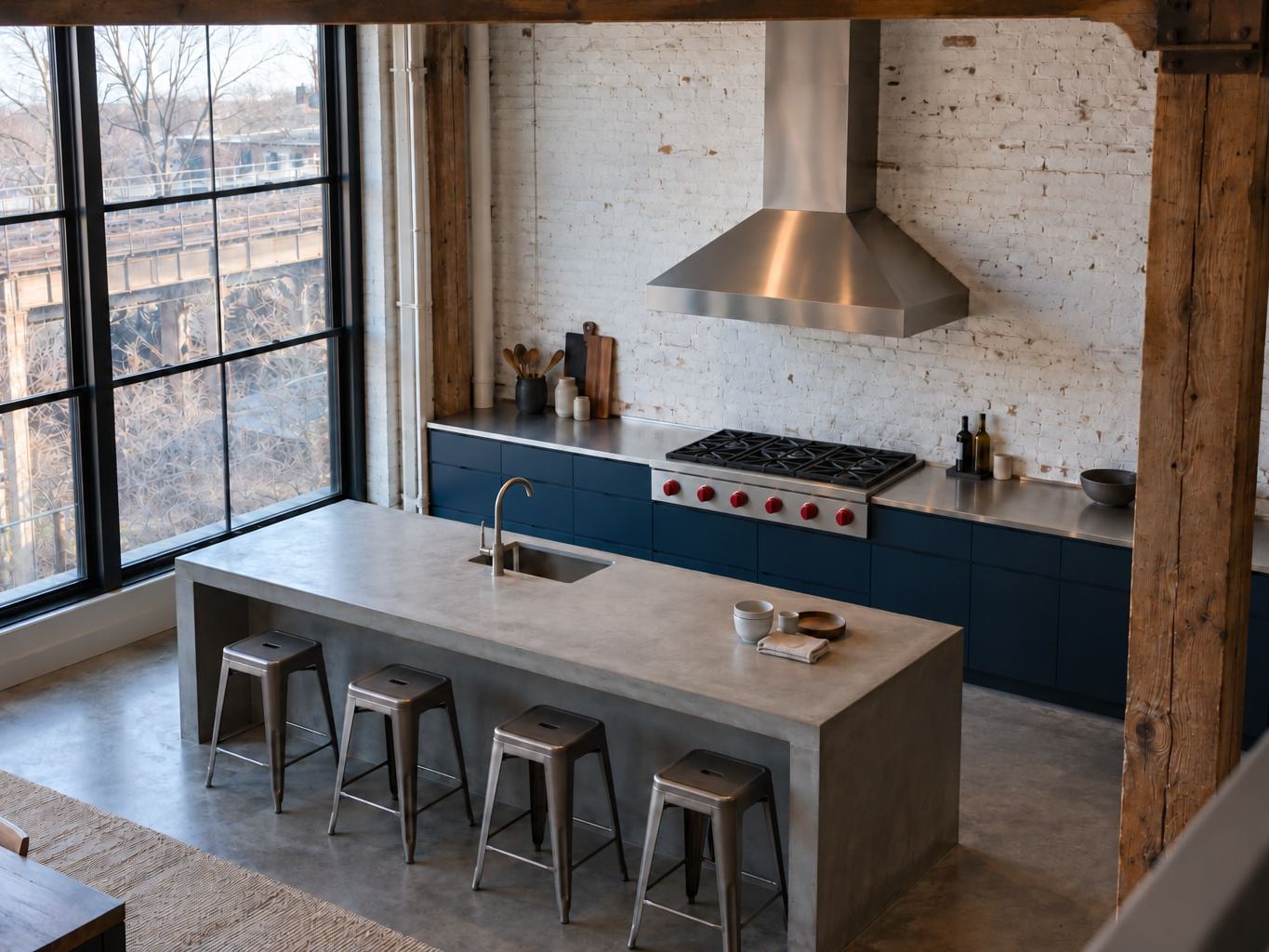
Loft features and what they mean for a repair
None of these make a Wolf harder to fix. They decide the route to the fault and the small things you can do beforehand.
| Loft feature | Effect on the repair | How you can help |
|---|---|---|
| Ceilings up to fourteen feet | The hood or its chimney cover may hang high above the cooktop; reaching the fan, lights or controls needs a tall ladder and open floor below | Tell us the ceiling height and hood style when you book |
| Cooking on an island | Gas and power reach a rangetop or cooktop from below, so the work often happens inside the island cabinet | Empty the cabinet under the cooktop before the visit |
| Downdraft vent in the island | The blower and its duct sit under the counter or the floor, sharing space with the gas and electrical feed | Clear the base cabinets around the downdraft |
| Gas on an unusual route | Lines run through thick brick or concrete and around old structure, so weak flames may come from the supply as much as the burner | Point out where the appliance shutoff valve is, if you know |
| Open plan, no walls | Smoke and grease spread through the whole space, so a hood that captures poorly is noticed fast | Note when the hood falls behind: high heat, searing, long simmers |
Hoods under a high ceiling
Straight answer
Can a range hood be repaired when the loft ceiling is very high?
Yes. Wolf hoods under tall loft ceilings are repaired in place; the technician just needs a stable ladder, open floor beneath the hood and, ideally, a heads-up about the ceiling height and the hood model. Fans, lights, switches and filters can all be reached from below.
Loft kitchen beliefs, checked
-
People sayWith a ceiling this high, smoke just floats away, so the hood barely matters.
In practiceHeight spreads smoke and grease across the whole loft before it settles on beams, brick and fabric. A hood works by catching heat right above the cooktop. If it struggles, the cause is worth finding, whether it is the fan, the filters or the duct path.
-
People sayA pro hood is supposed to roar like that.
In practiceA Wolf hood has a steady sound at each speed. A new rattle, a grinding note or a hum that rises and falls usually means a loose part, a worn blower or something in the duct, and catching it early keeps a small repair small.
-
People sayIf the island burners are slow to light, the building's old gas line must be failing.
In practiceSometimes, but more often the cause is on the cooktop: moisture or grime on an igniter, a cap knocked slightly askew after cleaning, a tired spark module. The technician checks the appliance and the supply before naming either one.
Getting your loft ready for the visit
Converted buildings come with their own logistics. A few steps make the visit faster.
-
Describe the space when you book
Ceiling height, whether the cooktop sits in an island, and the hood type (wall, island or downdraft). It tells the technician which ladder and parts to bring.
-
Sort out building access
Many warehouse conversions have a freight elevator, a loading door or a buzzer that only reaches certain units. Let us know how a technician with tools gets to your door.
-
Clear the floor and the island
Move stools, rugs and anything stored on the island. Open floor under a high hood is what makes a safe ladder setup possible.
-
Empty the cabinet below the cooktop
Gas, power and sometimes the downdraft blower live there. The technician needs room to reach them without moving your things.
-
Plan around your workday
In a live-work loft, a visit can overlap with clients or recordings. Pick a time inside visit hours, daily 8 AM–6 PM, when some noise is fine.
Cooktops in converted warehouses
Straight answer
Can a Wolf cooktop in a converted warehouse loft be repaired on site?
Yes. Igniters, burners, spark modules, induction boards and controls are all reachable on site, usually through the island cabinet below. In older industrial buildings the technician also checks the gas supply reaching the cooktop, because long, unusual gas routes can cause symptoms that look like a cooktop fault.
Bucktown loft questions
- Our loft building has a shop on the ground floor. Does that change anything for the repair?
- It can. In some mixed-use buildings the lower floors have a commercial gas service, so the line reaching a residential kitchen upstairs may be piped differently from a typical house. Mention the layout when you book. The technician checks how gas reaches your Wolf before blaming the appliance, and work on the building's own piping stays with its owner and a licensed plumber.
- Can you install a bigger Wolf hood in my loft?
- No. We repair Wolf equipment that is already installed; new installations and duct changes are work for a contractor. If you are weighing a different hood, our loft ventilation notes cover the questions to ask.
- How does the technician get in at a converted warehouse?
- Tell us when you book: which door to use, whether a buzzer or a freight elevator serves your floor, and where a van can stop to unload. Old warehouses often have more than one entrance, and a clear route gets the technician to the kitchen with tools and parts in one trip.
Related pages for loft owners
- Ventilation repair
Wall, island and downdraft hoods: weak suction, noise, lights and controls.
- Cooktop and rangetop repair
Island burners that click, lag or burn unevenly, and induction zones that stop.
- Ventilation in a loft
Our notes on matching a Wolf hood to a tall, open space.
- Gas in loft kitchens
How gas reaches an island in an old industrial building, and what to keep an eye on.
- Logan Square
Bucktown's neighbor to the west: bungalows, two-flats and freshly remodeled kitchens.
- All neighborhoods
Lincoln Park, our base, and the other areas we serve.