Wolf repair · Ranges
Wolf range repair where the gas line is older than the range
In the older buildings of the North Side, a Wolf range is often younger than everything feeding it: gas piping laid generations ago, supply pressure that sags in an old building, an electrical panel never sized for a dual-fuel oven or an induction top. So a burner that will not catch or an oven that runs cold gets checked against its supply as well as its own parts. Urban Wolf Repair Chicago repairs Wolf dual-fuel, gas and induction ranges across the North Side of Chicago, from 30-inch condo models to 60-inch ranges with a griddle or French top. Phone (872) 266-4445 whatever the hour, or reserve a technician; visits run daily 8 AM–6 PM.
4.9 out of 5 for Wolf Range Repair, from 87 customer reviews About the reviews
Read the symptom, then check the supply
Six patterns cover the usual range complaints. On the left, what you notice while cooking; on the right, where testing starts, including the gas or power that feeds the range.
- Burner clicks but the flame never catches, or sparks only now and then
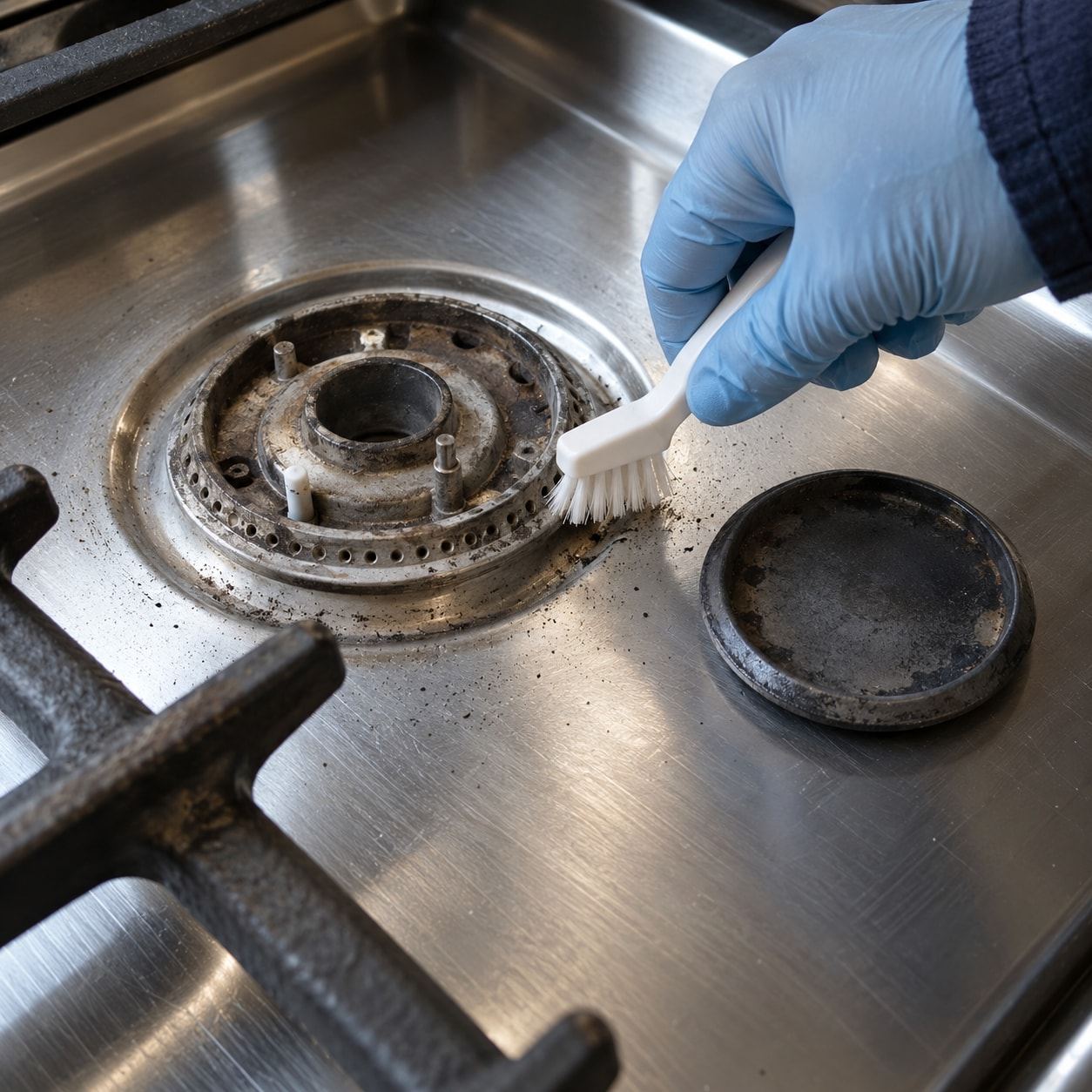
- Likely cause Food or moisture on the igniter, blocked burner ports, a tired spark module, or a sticking burner valve Repair details
- Roasts come out over- or under-done compared with the setting
- Likely cause Temperature sensor drifting, a weak bake or broil element, or a control that needs calibration Repair details
- Flame is low, yellow, lopsided or lifts off the burner
- Likely cause Dirty ports, a misaligned burner cap, an orifice issue, or low gas pressure in an older building's supply
- There is a gas odor hanging around the range
- Likely cause Not a diagnosis job for the homeowner. Follow the gas safety steps further down this page first Repair details
- Panel shows an error, goes dark, or ignores the controls
- Likely cause Control board, wiring connector, or a sensor feeding the board bad readings Repair details
- Convection fan grinds, rattles or stops turning
- Likely cause Worn convection motor or bearing, or debris near the fan blade
Straight answer
Why does my Wolf range burner keep clicking but not light?
Most often the spark is there but the gas refuses to catch, or the spark is too feeble to do the job. Typical culprits: an igniter soaked or crusted after a boil-over, plugged burner ports, a cap sitting crooked, a spark module losing strength, or a burner valve that sticks. Dry everything and reseat the cap; if the burner still won't take, a technician should test the ignition circuit.
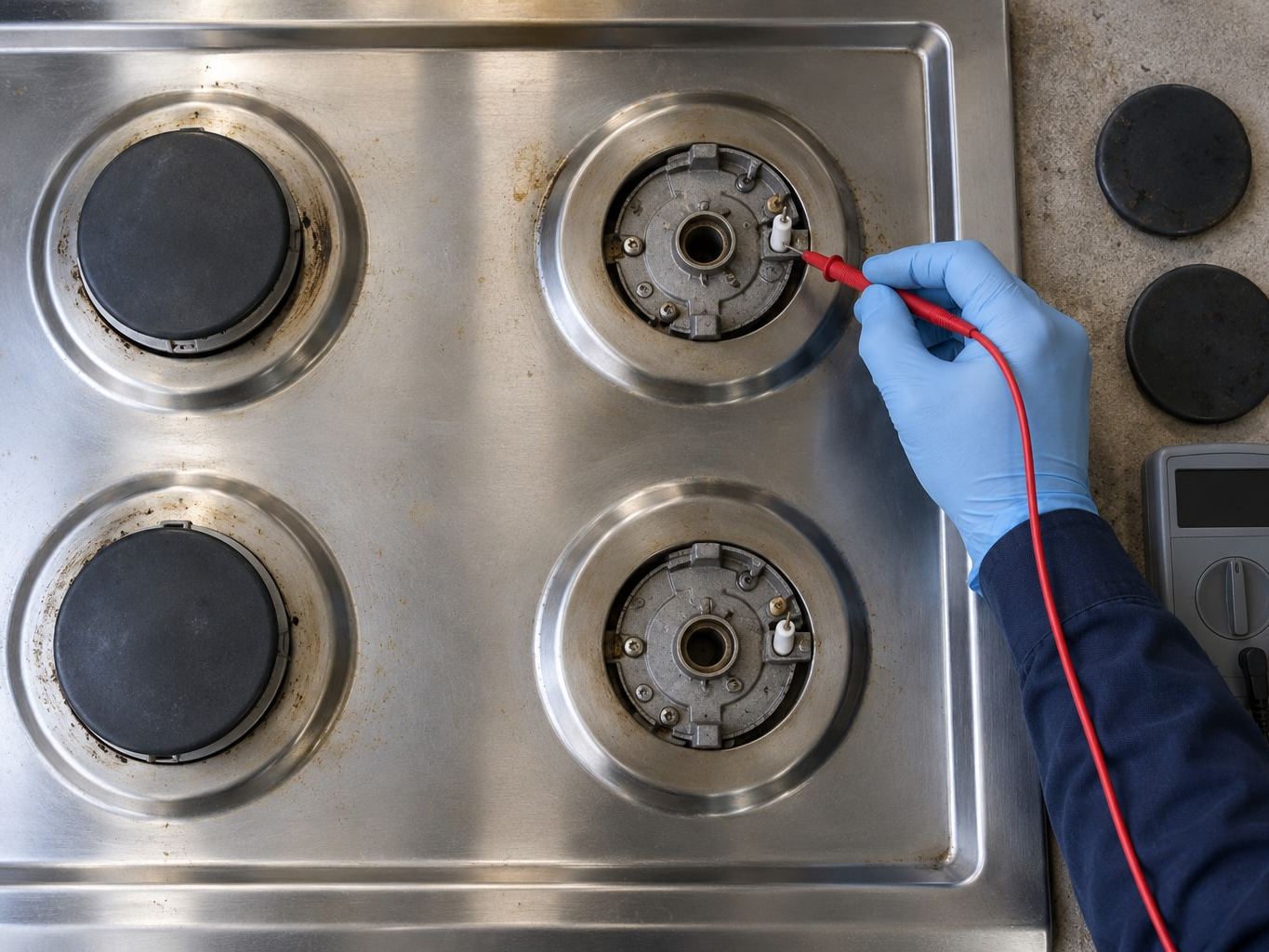
How a range visit unfolds, start to finish
Every visit tests the range and what feeds it before any part is touched, so the repair fixes the cause and not the nearest suspect.
-
Test every system, not just the complaint
We light each burner and study the flame, test the igniters and spark module, run the oven in bake and convection, and cycle the controls through their modes. A range brought in for a clicking burner can also have an oven sensor drifting, and you deserve to hear about both on the same trip.
-
Explain the fault and break down the cost
The technician describes the fault in everyday language and shows a parts-and-labor split before a screwdriver comes out. Work starts only after your go-ahead, and the total does not grow later with surprise extras. Whatever you paid for the visit, $89, is subtracted from the repair you sign off on.
-
Repair with parts matched to Wolf specifications
The van carries the parts Wolf ranges call for most, and each one is matched to your model number before it goes in. Many range repairs are finished on the first visit, often within an hour or two. When a rarer component must be special-ordered, the technician schedules a return trip to install it.
-
Leak-check the gas side and watch it burn
Any job on a gas appliance closes with an electronic leak detector run over the connections. After that, all burners get lit once more, the oven climbs back to temperature, and we step away only once the burners and the oven both work as they should.
If the kitchen smells like gas
Gas safety
Leave first. Make the call from outside.
A rotten-egg odor near a range belongs to the gas utility first, not to a repair company. Skip any attempt to locate the source or fix it on your own.
- Leave knobs, the shutoff valve, wall switches, appliances and windows exactly as they are, and strike no match or lighter.
- Walk everyone out of the house without stopping to adjust anything.
- From the sidewalk or yard, phone your gas utility or 911.
- When the utility has inspected the line and given the all-clear, reach us at (872) 266-4445 for the range repair itself. Our urgent repair page covers what else counts as urgent.
When the oven is the problem
Straight answer
My Wolf dual-fuel range oven won't heat — what's wrong?
A dual-fuel Wolf pairs gas burners with an electric oven, so a cold oven almost never traces back to gas. The likely suspects are the bake or broil element, the temperature sensor, the control board, or the circuit feeding the range. Working burners plus an oven that stays cool or stalls far below the setting point straight at the electric side.
Range parts we test and what we do with them
Many kitchens around Lincoln Park sit in buildings plumbed for gas long before anyone installed a professional range. A large Wolf burner asks more of the supply than the stove it replaced, so an old pipe, a narrow connector or a pressure dip while the whole building cooks dinner can show up as a lazy flame on the biggest burner while the small ones look fine. The technician therefore checks every burner together, and if the range is healthy and the supply is the issue, we tell you rather than swap parts that are not broken. Background reading: gas lines in older buildings and our range upkeep guide.
| Component | What goes wrong | What we do |
|---|---|---|
| Igniters and spark module | Weak, missing or nonstop sparking | Clean and dry the electrode, test the module, replace whichever part has failed |
| Burner valves | Knobs that bind, flame that ignores the dial, stuck clicking | Adjust or replace the valve, then recheck the flame across its range |
| Burners and orifices | Low, uneven or yellow flame | Clear burner ports, inspect the orifices, set burner caps correctly |
| Thermostat and temperature sensor | Oven runs hot, cool or swings | Measure the sensor, replace it if out of spec, calibrate the control |
| Control board | Error codes, dead display, no response | Diagnose inputs and wiring first, replace the board only when it is the fault |
| Convection motor | Noise, slow spin, fan not turning | Test the motor and replace it, check the fan and its mounting |
Dual-fuel or all-gas: what the technician checks first
Wolf fits the same style of burners on both, but the ovens underneath are different animals, and that reshapes the diagnosis.
Dual-fuel range
- Electric oven heated by bake, broil and convection elements
- Oven trouble traces to elements, sensors, the control board or the electrical feed
- A tripped breaker or a strained circuit can pass for a failed oven
- Aging apartment wiring deserves a look when the oven trips or bakes unevenly
All-gas range
- Oven heated by its own gas burner with a separate igniter
- Oven trouble traces to that igniter, the oven burner, the safety valve or the sensor
- Weak supply pressure may starve the oven burner and the cooktop together
- An electronic leak test of every fitting comes before we call it done
Same red knobs, different oven. Mention your model when you phone so the technician loads the right parts. Still deciding between the two? Our piece on dual-fuel ranges weighs them up.
Wolf range service around Lincoln Park
Straight answer
Who repairs Wolf ranges in Lincoln Park, Chicago?
Urban Wolf Repair Chicago, an independent shop based in Lincoln Park, services Wolf ranges, wall ovens, cooktops and the rest of the Wolf cooking line throughout the North Side of Chicago. Someone picks up the phone 24/7; technicians are out daily 8 AM–6 PM. You pay $89 for the visit, it is deducted from the repair, and the final figure comes only after the range has been diagnosed.
Range questions people ask us
- My Wolf range keeps clicking even after the burner is lit. Is that dangerous?
- Nonstop clicking almost always means moisture or food has worked into a burner switch, typically after a boil-over or a soaking wipe-down. It isn't an instant danger, yet ignition parts wear quickly when they spark around the clock. Give the top a full day to dry; if the clicking hangs on, schedule a visit.
- Can you fix a Wolf induction range too?
- Yes. Wolf induction ranges are part of the work, alongside dual-fuel and all-gas models. Induction faults involve the power electronics and coils rather than flames, so the testing is different, but the visit fee and the approve-first process stay the same.
- How much does it cost to repair a Wolf range?
- Arrival and diagnosis are $89, and that sum comes off the final bill. The real price hinges on which component failed and what it takes to replace, so you hear it once the range has been diagnosed and before work begins. Our pricing page walks through what shapes that figure.
- Can you check my range and my wall oven on one trip, and is that two fees?
- One fee. The $89 applies to the trip itself, whatever number of Wolf appliances get looked at, so a range, a wall oven and a hood can all be inspected while the technician is there.
- Will it be fixed in one visit?
- Frequently. Wolf's most-requested parts are stocked in the van, so a good share of range repairs finish on the first stop. If something less common must be ordered, we return to fit it and retest the whole range.
- Is Wolf the only brand you service?
- Yes — Wolf cooking and ventilation gear is our whole focus, which is why the technician knows these ranges inside out. The full list of appliance types lives on our services page, and every way of reaching us is on the contact page.