Wolf repair · Outdoor grills
Bringing Wolf grills back after a lakefront winter
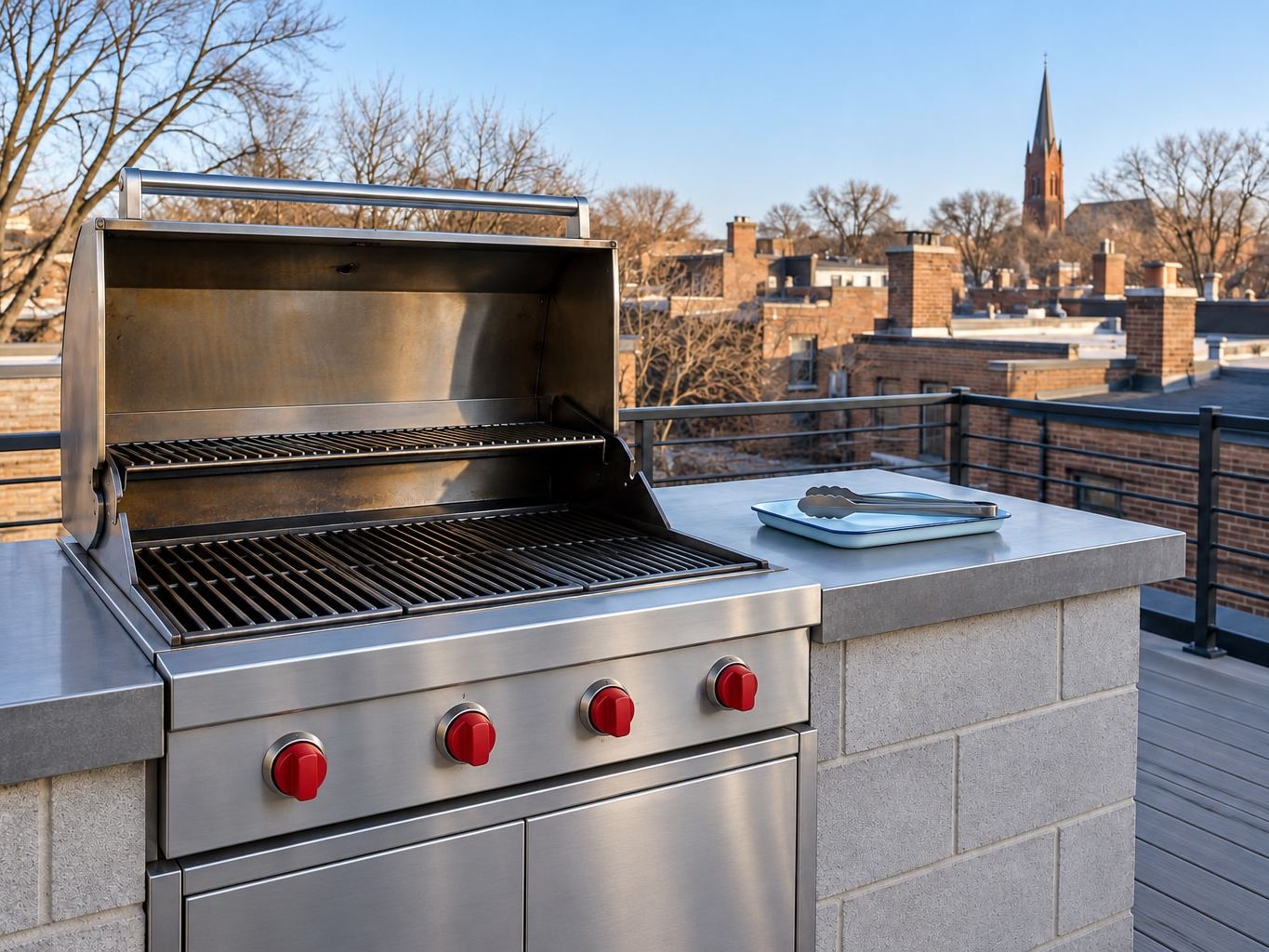
Thick stainless panels make these grills tough, yet twelve months of Chicago weather still find the soft spots: wind off the lake drives grit into the burners, freezing nights crack corrosion loose, and humid summers sit inside the firebox. We repair built-in Wolf gas grills on roof decks, terraces, balconies and backyards across the North Side of Chicago. Call (872) 266-4445 or book a slot and tell us how to reach the grill.
4.9 out of 5 for Wolf Outdoor Grill Repair, from 87 customer reviews About the reviews
Where your grill lives, and what that costs it
Almost every grill fault we see can be traced to its spot and the weather it took. The setting also decides how the technician gets to it, so it shapes the visit from the start.
- Condo and high-rise roof decks
Full wind exposure, salt-free but grit-heavy air and big temperature swings. Access runs through the building: elevator to the top floor, a roof door, sometimes a key held by management. We sort these details when you book.
- Brownstone and greystone roof decks
Smaller decks reached by a narrow stair or hatch. The grill often sits close to chimneys and parapet walls that trap leaves and soot, which find their way into burner ports.
- Terraces and wraparound balconies
Partial shelter, but rain blows sideways under the overhang and pools on the grill head. Igniter electrodes and their wiring take the worst of it.
- Backyard islands behind two-flats and rowhouses
Protected from wind but close to soil, leaves and critters. Spiders and nests in burner tubes after a long winter are a classic cause of yellow, lazy flames.
Straight answer
What stops a Wolf outdoor grill from lighting?
On a Wolf outdoor grill, a no-light usually comes down to a wet, cracked or misaligned igniter electrode, a weak spark module, or ports plugged with spider webs, leaves and grit left over from the cold months. Supply trouble is rarer. Should a gas smell appear while you are trying, quit and walk away from the grill; if not, have us test the spark circuit.
Grill trouble, and the likely part behind it
These six problems account for most outdoor grill calls. We confirm the cause on the deck before any part is ordered.
- Clicks but never lights, or no spark at all
- Likely cause Igniter electrodes, their wiring or the spark module, often after moisture got in
- Burner tubes rusted or flames ragged and yellow
- Likely cause Corroded or blocked burner tubes; replacement restores a clean blue flame
- Weathered gas connections
- Likely cause Fittings and hoses aged by freeze and heat; every connection is checked and leak-tested
- Hot zones next to cold zones
- Likely cause Clogged burner tubes or heat distribution plates that have warped or filled with debris
- Rotisserie will not turn
- Likely cause The rotisserie motor, the cord feeding it, or the coupling that grips the spit
- Rusted grates, stuck knobs, tired hardware
- Likely cause Weather wear on exterior parts: grates, knobs, bezels and hinges
A grill's year on the North Side
There are no fixed dates here, only the order in which problems tend to show up. The full winter routine is in our article on keeping a Wolf grill through Chicago winter.
- First warm weekend
Uncover the grill, remove the grates and look into the firebox before lighting. Nests, leaves and flakes of rust are common now. This is when most no-ignition calls come in.
- Before the first big cookout
Run each burner and watch the flame. Even blue flame along every port is what you want; yellow tips or gaps point to blocked tubes.
- Peak summer
Heavy use and humid air. Grease builds on the heat distribution plates and can cause flare-ups and uneven heat. Rotisserie motors work hardest now.
- After a storm
Wind-driven rain reaches the ignition parts even under a cover. Give the grill a dry day before lighting if it was soaked.
- Before the first hard freeze
Clean the grill, have the gas connections and ignition checked, and fit a proper cover. Problems found now are easier to fix than in spring.
- Deep winter
Leave it covered and unused unless it was prepared for winter cooking. Snow load on a roof deck cover is worth brushing off.
Straight answer
What causes uneven heat across Wolf grill burners?
Cold spots usually mean a burner tube is partly blocked, often by grease, rust or insects, or a heat distribution plate has warped or filled with residue. Both stop heat from spreading evenly. Cleaning or replacing the tube or plate and checking each burner's flame normally brings the surface back to even heat.
If there is a gas smell at the grill
Gas safety
Hands off. Get away from the grill, then phone for help.
Gas lines run to outdoor grills just as they do to indoor ranges, and a fitting can fail in either place. When a gas odor hangs around the grill or its supply pipe:
- Leave every knob, the igniter button and each valve exactly as they are; no relighting attempts.
- Do not use light switches, phones or anything electrical near the grill.
- Leave the deck, terrace or yard and put real distance between you and the grill; when it stands beside an open doorway, get out of the home as well.
- Once you are clear, phone the gas company that serves your building, or 911.
- Our number comes after theirs: book us once the utility has declared the area safe. We fix the grill later; an active leak is not a repair visit.
Before you book, help us reach the grill
Rooftop and terrace jobs go smoothly when access is planned. Gather these answers before you phone or reserve online.
- Where the grill is: roof deck, terrace, balcony or yard
- How the technician gets there: elevator, stair, roof hatch or side gate
- Whether management needs advance notice or a freight elevator booking
- Who holds the key to the roof door or gate on the day
- Whether the grill is covered and can be uncovered before arrival
- What happens when you try to light it: clicks, no sound, flame then out
- Whether the grill has been used since last fall
- The model and serial label, usually under the control panel or inside the cart door
Rooftop repairs
Straight answer
Can you repair an outdoor grill on a Chicago condo rooftop?
Yes. Rooftop and terrace grills are routine for us, alongside backyard islands. Tell us about the building when you book, including elevator access, roof door keys and any management rules, so the visit fits the building's schedule. Most repairs are done on the deck; the grill rarely needs to move.
Grill questions owners ask
- Do you check for gas leaks after repairing my grill?
- Yes. Every repair on a gas appliance, the grill included, ends with an electronic leak detector check on each connection we touched and the fittings around them. We also watch each burner's flame before we leave.
- Our grill has sat outside for many seasons. Should we still fix it?
- Usually. The body is heavy stainless steel, while the wearing pieces (burner tubes, igniters, heat plates, grates) are all replaceable. After diagnosis you get a written breakdown of parts and labor, and nothing starts until you approve it. How quotes are built is on our pricing page.
- My grill flared up and went out. Is that urgent?
- Any hint of gas odor means the safety box above comes first, with the utility or 911 contacted before anyone else. Without that odor, let the grill cool, keep it unlit and phone us. What counts as urgent versus what can wait for a scheduled slot is laid out on the urgent repair page.
- Which neighborhoods do you cover for grill repair?
- We work across Lincoln Park, Lakeview, Wrigleyville, Bucktown, Logan Square and DePaul. See our neighborhoods page for details, and the contact page for how to reach us. A rooftop grill and a kitchen range checked on one trip share a single $89 charge, which then comes off the repair total.