Wolf repair · Ventilation
Wolf hood and downdraft repair for open-plan kitchens
In a converted loft or a high-rise condo, a Wolf hood is fighting more than smoke: long duct runs, open ceilings and a kitchen that flows straight into the living room. When the air stops moving, the first job is to learn whether the hood failed or the path behind it did. We repair Wolf wall, island and ceiling hoods and downdraft vents across the North Side of Chicago. Call (872) 266-4445 or reserve a visit online.
4.9 out of 5 for Wolf Ventilation Repair, from 87 customer reviews About the reviews
Air in an open space behaves differently
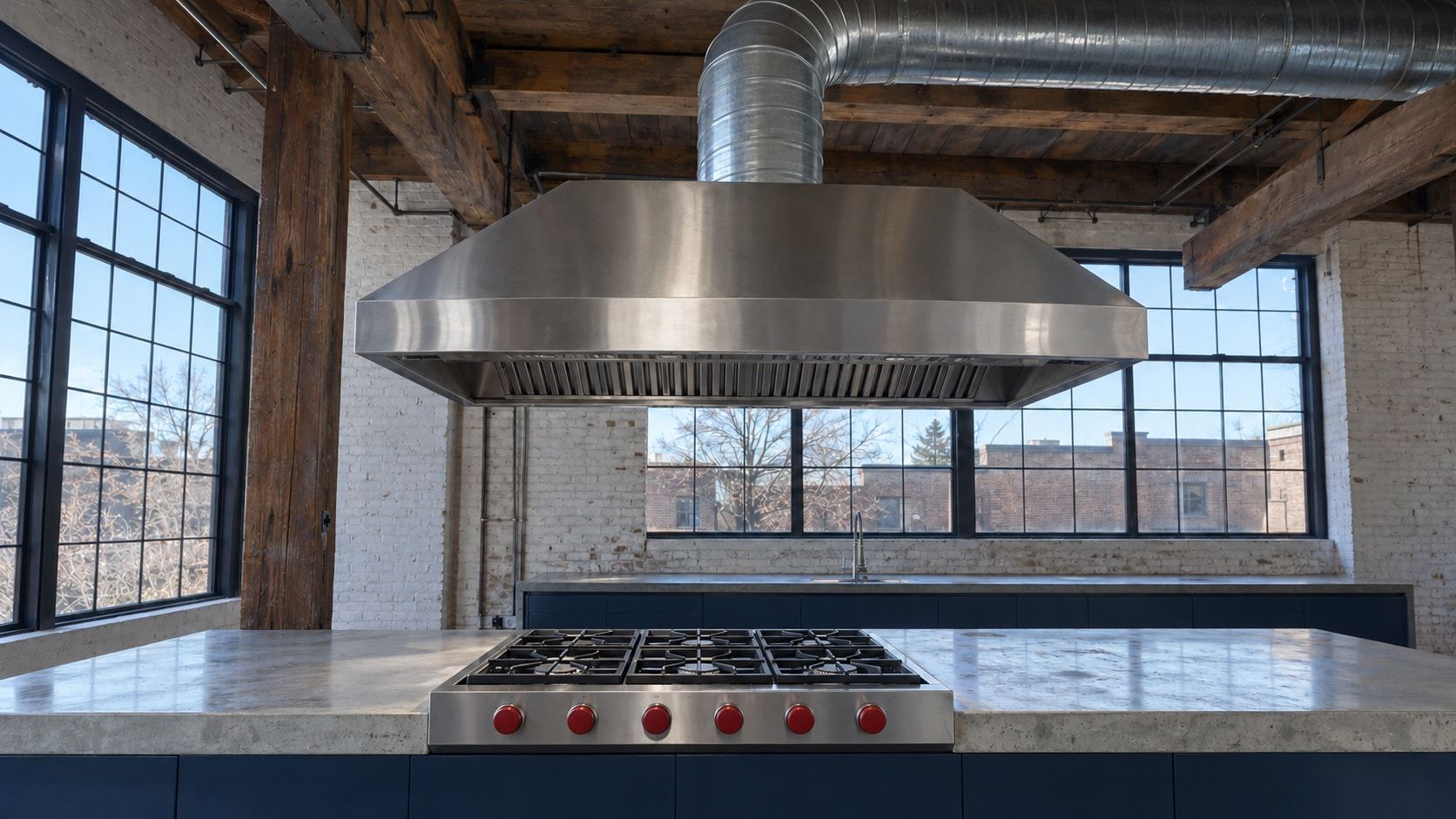
A hood in a closed suburban kitchen has walls on three sides helping it catch rising heat. In a warehouse conversion with ceilings reaching about fourteen feet, the plume off a wok or a seared steak spreads sideways long before it reaches the canopy. An island hood there works at the edge of its capture zone every night, and any drop in blower performance shows up as haze across the whole floor.
Condos add a second layer. The duct often snakes through a soffit, around a beam and across a ceiling before it finds an exterior wall, and a renovation may have squeezed it into a smaller section than the hood was designed for. A hood connected to a narrowed or kinked duct sounds louder and pulls less, even when every part inside it is healthy.
That is why our visits begin with airflow rather than a parts list. We measure how much air the hood is actually moving, look at the filters and the first stretch of duct we can reach, and only then open the blower housing. Blaming a motor for a crushed duct wastes your money; blaming the duct for a worn bearing wastes your evening.
Six ways a Wolf hood tells you something is wrong
Each sign below points to the parts we check first. Several can overlap: a hood with a dragging bearing will also pull less air.
- Blower is silent on every speed
- Likely cause Motor, its wiring, a tripped thermal cutoff or the control board that powers it
- Grinding, humming or rattling
- Likely cause Worn motor bearings, an unbalanced or cracked blower wheel, or debris inside the housing; open ducts in lofts amplify the vibration
- Smoke drifts past the canopy
- Likely cause Weak motor, clogged filters or a restricted duct; renovations often shrink the duct behind the wall
- Lights flicker or stay dark
- Likely cause LED module, its driver or the dimmer circuit
- Fan ignores the speed buttons
- Likely cause Speed control board, a worn switch or the remote control receiver
- Downdraft vent will not rise or stops halfway
- Likely cause Lift motor, drive gear, limit switch or a jam in the guide track Repair details
Straight answer
Why is my Wolf range hood fan making a grinding noise?
Grinding almost always comes from the blower: dry or worn motor bearings, a blower wheel that has lost its balance or cracked, or something loose rattling in the housing. Keep running it and a bearing can seize. Switch the hood off, use the lowest speed only if you must, and have the blower inspected.
Filter care that keeps the blower out of trouble
Grease-loaded filters are the most common reason a hood seems weak, and they make the motor work harder every day. These are the intervals we recommend to owners.
| Filter | What it does | How often | What happens if skipped |
|---|---|---|---|
| Stainless baffle filters | Catch grease from rising vapor in ducted hoods | Wash monthly; every two weeks if you sear, stir-fry or grill often | Grease narrows the openings, draw drops, and buildup can reach the blower |
| Charcoal (recirculating) filters | Trap odor in hoods that return air to the room | Replace every 6–12 months, sooner with heavy cooking | Odors pass straight through and the motor pushes against a clogged bed |
| Downdraft filters | Shield the downdraft blower below the counter | Check and wash on the same schedule as baffles | Grease drips toward the lift track and blower wheel |
| Duct beyond the hood | Carries air to the outside wall or roof | Have it looked at when draw falls with clean filters | A kinked or crushed section mimics a failing motor |
Is it the hood or the duct?
Straight answer
Why is my kitchen hood not pulling smoke in a Chicago loft?
In a loft, weak capture usually has one of three causes: greasy filters, a tired blower motor, or a duct that is too long, narrowed or kinked for the hood. High open ceilings make any loss worse. Clean the filters first; if draw stays weak, a technician should measure airflow before replacing anything.
What North Side buildings do to a hood
Ventilation trouble here often has a building story behind it. These are the settings we work in most, and what each one means for the repair.
- Bucktown warehouse lofts
Exposed ducts hung from joists carry blower vibration across the ceiling, so a small bearing noise can sound like machinery. Ceilings up to about fourteen feet also mean ladders and extra care; more on these spaces on our Bucktown page.
- Lincoln Park and Lakeview high-rises
Repairs here start with the building: access rules, a booked freight elevator and the management office's requirements. Tell us when you schedule and we plan around them.
- Renovated two-flats and greystones
Kitchens moved during a gut rehab often have long horizontal duct runs and a section that was reduced to fit a beam. That restriction is a frequent reason a strong hood feels weak.
- Island kitchens in open floor plans
With no walls to guide the plume, an island hood needs its full power. A worn wheel or a dragging motor shows up here first, as haze drifting toward the sofa.
What shapes the size of the job
We do not quote ventilation repairs from a phone description. Getting a technician to the hood costs $89 for the trip, the range under it included if it needs a look too, and that sum is credited to the repair; the repair is priced once the hood is open. These are the things that move it, explained on our pricing page.
- Type of hood
- A wall hood, an island canopy, a ceiling unit and a downdraft each open differently; a downdraft adds the lift mechanism below the counter.
- Reach and ceiling height
- A hood over a range under a standard ceiling is quick to reach. A canopy hung from a fourteen-foot loft ceiling takes more setup and time.
- Which part failed
- Lights and switches are smaller jobs than a blower motor, a new wheel or a control board.
- Condition of the duct
- If the duct is the restriction, we show you what we found. We repair the Wolf unit; reworking or rerouting duct is work for a duct contractor or your building.
Worth checking before you call
A few minutes with the hood can save a trip or make the visit shorter.
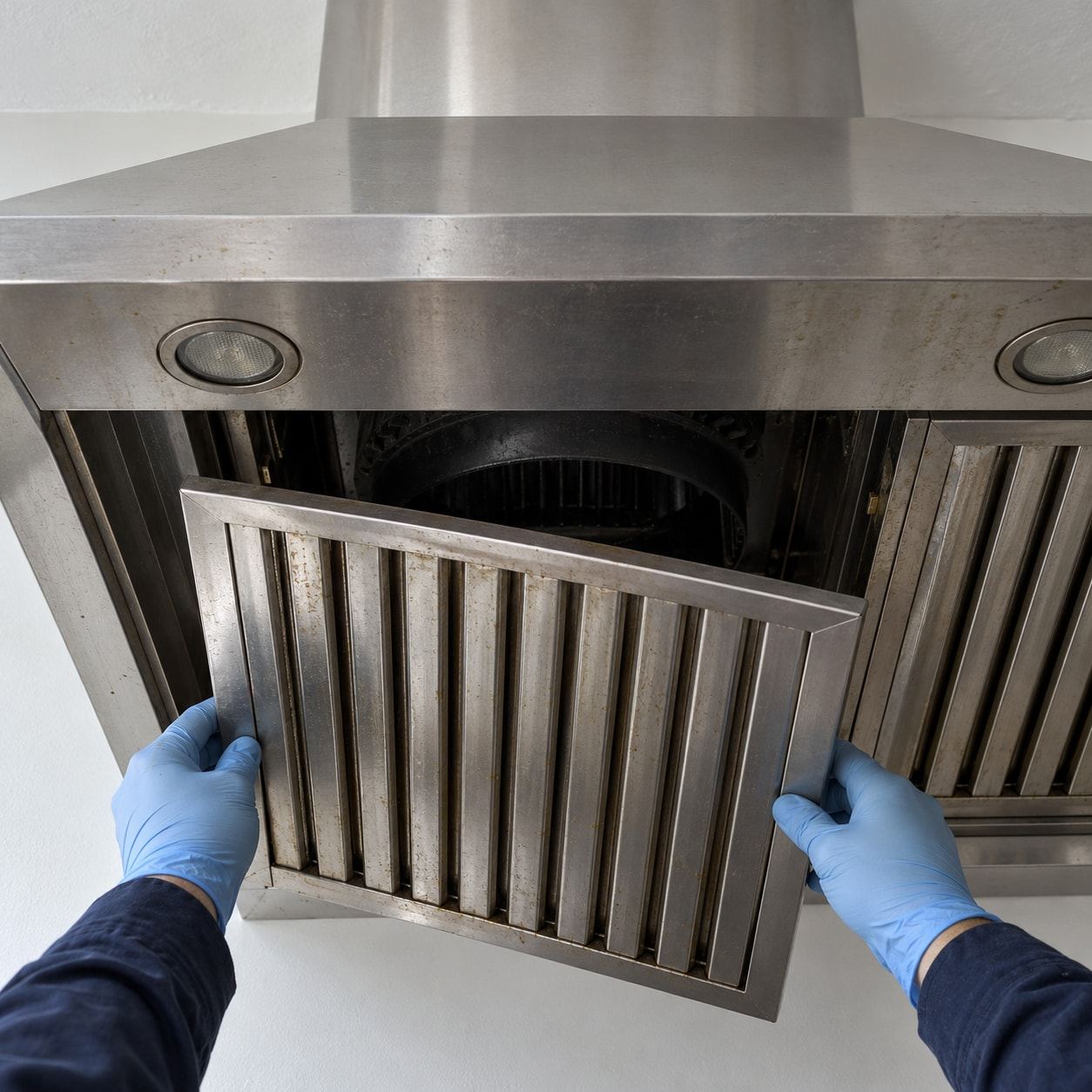
- Pull the filters and look at them in good light; heavy grease alone can explain weak draw
- Try every speed setting and note which ones work
- Check whether the lights and the blower fail together or separately
- Listen at low speed: a steady hum and a scraping noise point to different parts
- For a downdraft, note whether it moves at all, stops partway or tries and reverses
- Look at the breaker panel for a tripped kitchen circuit
- If you live in a high-rise, ask management about freight elevator booking
- Have the hood's model and serial label handy; it is often behind the filters
When a downdraft stays down
Straight answer
Why won't my Wolf downdraft vent rise?
A downdraft that will not rise usually has a lift motor or drive gear problem, a failed limit switch, or something jammed in the guide track. If it hums but does not move, stop pressing the button so the motor does not burn out. A technician can test the lift circuit and free the track.
Ventilation questions from loft and condo owners
- My hood got louder after our kitchen renovation. Is something broken?
- Possibly not inside the hood. Renovations often change the duct: a smaller section to clear a beam, a new elbow, a longer run. The blower then works against more resistance and sounds louder while moving less air. We check the hood first, then show you whether the restriction is in the duct.
- Can you match the light color when a hood LED goes out?
- Yes. Replacement LED modules are chosen by color temperature, so the new light matches the rest of the canopy instead of looking bluer or warmer. We also check the driver and dimmer, since a flickering light is not always the bulb itself.
- How often should I clean the baffle filters on a Wolf hood?
- Once a month for most households, and every two weeks if you cook at high heat often. A soak in hot water with a degreasing soap does the job; let them dry fully before they go back in. Charcoal filters in recirculating hoods are not washable and need replacing every six to twelve months.
- Will you help me choose a new hood for my loft?
- We repair Wolf ventilation rather than sell or install it, but our article on ventilation for loft kitchens walks through what matters when picking one. If you are unsure whether to repair or replace, we will tell you honestly after diagnosis.
- Do you also fix the range under the hood?
- Yes, every Wolf cooking appliance is in scope, including the range and cooktop beneath it. If we check both on one visit, the $89 fee is charged once. See the full list on our services page.
- How do I arrange a visit in a building with strict access rules?
- Book online or by phone and mention what the building expects: freight elevator hours, paperwork the management office wants, or a front-desk check-in. Our contact page explains what to have ready so the technician arrives at a time the building allows.