Neighborhood · Around Wrigley Field
Wolf repair in Wrigleyville's small prewar kitchens
Wrigleyville apartments were built between the twenties and the forties, long before anyone planned a kitchen around professional cooking equipment. Owners who renovate still fit a lot of Wolf into a little room: a cooktop over a drawer, a wall oven stacked over a steam oven, a microwave drawer slipped beneath the counter. When one of those stops working, the repair is less about the part and more about getting to it carefully. That is what this page is about. Questions first? Call (872) 266-4445.
Big equipment, tight quarters
A Wolf appliance in a compact kitchen behaves exactly like one in a large kitchen. What changes is everything around it. Built-in units sit shoulder to shoulder, cabinets are fitted to within a hair by whoever did the remodel, and there is often no spare floor to slide a wall oven out onto. A technician who rushes here scratches a finish or cracks a tile; one who plans ahead protects the cabinetry, supports the unit on the way out and puts it back exactly where it was.
The gas side needs the same patience. Many of these buildings still run on piping that is close to a century old, and a few connections are newer than the walls they pass through. Weak flames on a Wolf cooktop, a slow oven preheat or a burner that clicks on and on before lighting can come from the appliance, but they can also come from a tired supply line or low pressure upstream of it. Telling the two apart is the first job on any Wrigleyville visit.
Then there is ventilation. Prewar layouts leave few routes for a duct to reach outside, so hoods in these kitchens are often short-run or recirculating installs chosen because nothing else would fit. A hood that hums but does not clear smoke is worth a look before anyone assumes the motor is gone.
The Wrigleyville we drive into
- Wrigley Field
The ballpark shapes the neighborhood and its traffic. On game days and during big events, curb space near the stadium disappears, so we factor that into the visit window when you book.
- Courtyard buildings
U-shaped walk-ups wrapped around a garden court, with several entries and stairs instead of elevators. Parts and tools go up by hand, which is part of why we plan the job before we arrive.
- Six-flats
Three floors, two units per floor, galley or L-shaped kitchens. A typical place to find a Wolf wall oven and microwave drawer sharing one narrow wall.
- Prewar walk-ups
Homes from the twenties through the forties, many renovated more than once, so the gas connection, the wiring and the cabinetry may each come from a different decade.
Straight answer
Who fixes Wolf appliances in Wrigleyville?
Six-flats, courtyard buildings and prewar apartments around Wrigley Field tend to pair compact kitchens with older gas lines, and Urban Wolf Repair Chicago repairs the Wolf cooking and ventilation equipment in them. The shop is independent and based in nearby Lincoln Park. Calls are answered 24/7, visits run daily 8 AM–6 PM, and the $89 trip charge goes toward the repair once you agree.
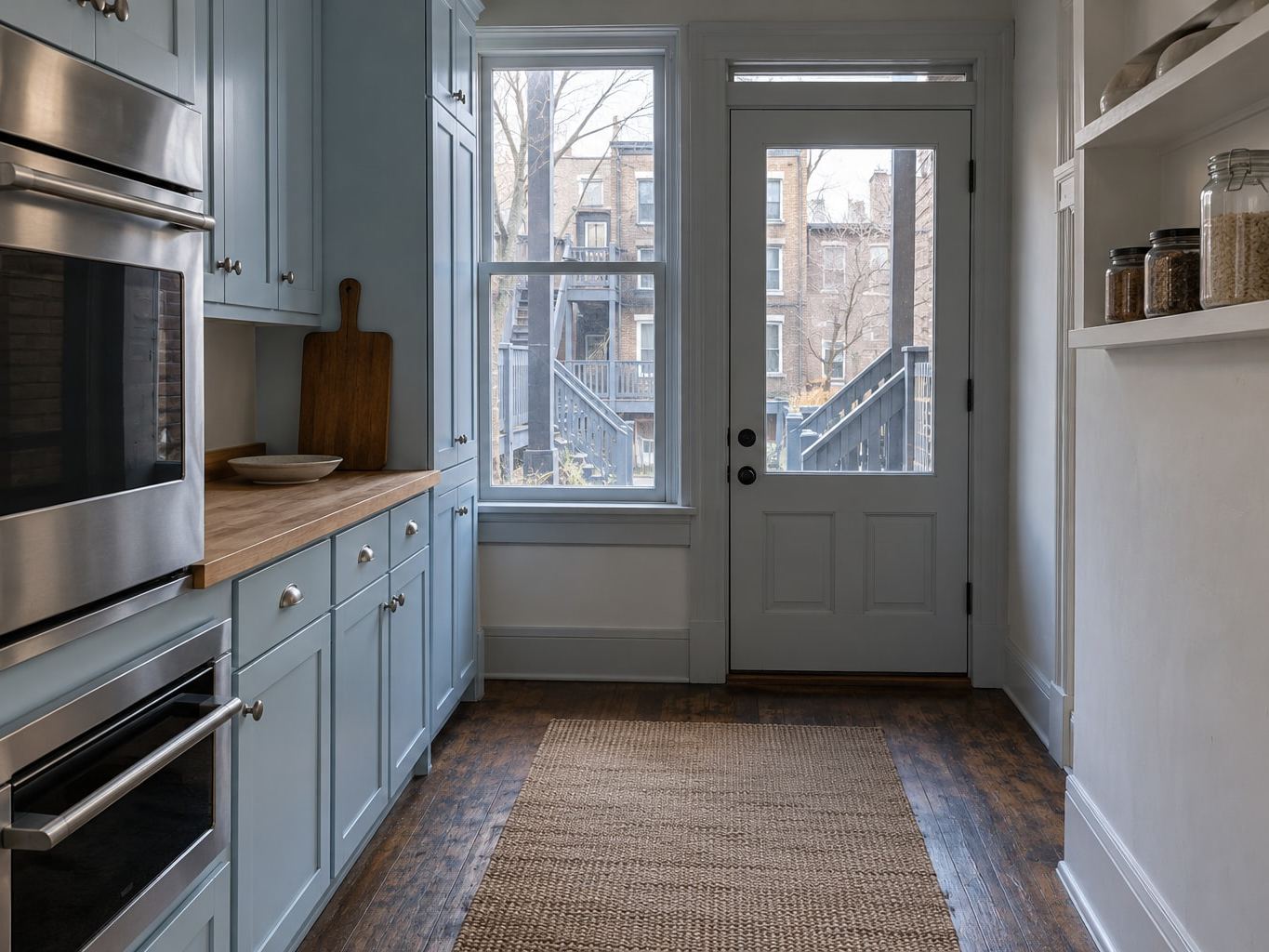
Small prewar kitchen or big new one: what changes
The fault list for a Wolf oven or cooktop is the same in any building. The way the repair unfolds is not.
Compact kitchen in a prewar building
- Built-ins are fitted tightly, so pulling a wall oven or drawer needs support and floor protection
- Gas reaches the appliance through older piping, so supply problems are checked before parts
- Ducting options are limited; a weak hood may be an install compromise, not a dead motor
- Tools and parts travel up stairs, so the technician brings what the symptoms point to
Spacious kitchen in newer construction
- Room to work around an island or a long run of cabinets
- Newer gas and electrical service, so faults usually sit in the appliance itself
- Ducts tend to be planned with the hood, which makes airflow problems easier to trace
- Elevators and loading areas, but also building rules about hours and access
Neither kitchen is harder to fix in principle. The prewar one simply rewards a technician who checks the supply first and handles the cabinetry like it belongs to someone, because it does.
Repairs in small spaces
Straight answer
Can Wolf appliances be repaired in a small prewar Chicago kitchen?
Yes. Most Wolf repairs, from igniters and sensors to fans and control boards, are done in place or with the unit eased forward a little. Tight kitchens just need more care: protecting the floor, supporting built-in units and checking the old gas supply before blaming the appliance.
Old gas lines in prewar buildings
Gas safety
Gas odor: walk out, then phone
Old piping is the reason this matters in Wrigleyville. If you smell gas, or notice a rotten-egg odor near the cooktop, leave everything exactly as it is: hands off the burner knobs, light switches, the oven or the windows, and do not make calls inside. Walk everyone down the stairs and out to the sidewalk, and only there phone your gas utility or 911. Our part comes later, once the utility has inspected and cleared the building. Our article on gas lines in older buildings explains why connectors in old walk-ups deserve attention.
- Do not go looking for where the odor comes from
- Do not light anything or switch anything on or off
- Make the call to the utility or 911 from the street
- Book the appliance repair after the all-clear
Getting a technician near the ballpark
Straight answer
Can I get appliance repair near Wrigley Field on a game day?
Yes, but tell us about the game when you book. Parking around Wrigley Field gets scarce on game and event days, so we plan the visit window around it, or suggest a different slot if that serves you better. Calls are taken 24/7; visits run daily 8 AM–6 PM.
Wrigleyville repair questions
- My Wolf cooktop keeps clicking and takes ages to light. Is that the igniter or the old gas line?
- It can be either. On the Wolf itself, the usual suspects are a damp or greasy igniter, a burner cap sitting off-center or a spark module near the end of its life, while low gas pressure in an older building can make every burner slow to catch. Both get tested on the visit, which keeps you from buying an igniter the cooktop never needed.
- Does my built-in oven have to come all the way out for the repair?
- Only if the fault requires it. Many repairs are done from the front or with the oven moved forward slightly. When a full pull-out is needed, the floor is protected and the unit is supported so the cabinet face and the trim are not damaged.
- Can you reroute the duct for my range hood?
- We repair Wolf hoods and their fans, lights and controls. Moving or rebuilding ductwork through a prewar building is construction work, so if airflow is limited by the duct itself, we tell you what we found and you can take it to a contractor.
- Do you work on the stadium side and the residential blocks further out?
- Yes. We cover Wrigleyville as a whole, as well as Lakeview around it and Lincoln Park, where our shop is based. Our neighborhoods page lists all six areas we serve.
- My oven keeps tripping the breaker. Should I keep using it?
- Stop using it. When the panel cuts power as the oven warms up, suspect a fault in an element, the wiring or the supply circuit, and older panels in prewar buildings make that worth checking quickly. Leave the breaker off and book a visit.
Services Wrigleyville kitchens ask for
The Wolf equipment that fills compact kitchens here, plus the neighborhood next door.
- Cooktop repair
Endless clicking, lazy flames, induction zones that ignore your touch.
- Oven repair
Wall ovens that run hot or cold, slow preheats and convection fans that go quiet.
- Microwave drawer repair
Drawers that stick, will not open or stop heating, a common sight under prewar counters.
- Steam oven repair
Scale from city water, weak steam and descaling reminders that keep coming back.
- Lakeview
The larger neighborhood around Wrigleyville, from greystones to lakefront towers.